FTSE Reverses into the Red Hot U.S. Inflation, Hawkish Fed, and BoE Warnings Weigh
FTSE Reverses into the Red Hot U.S. Inflation, Hawkish Fed, and BoE Warnings Weigh
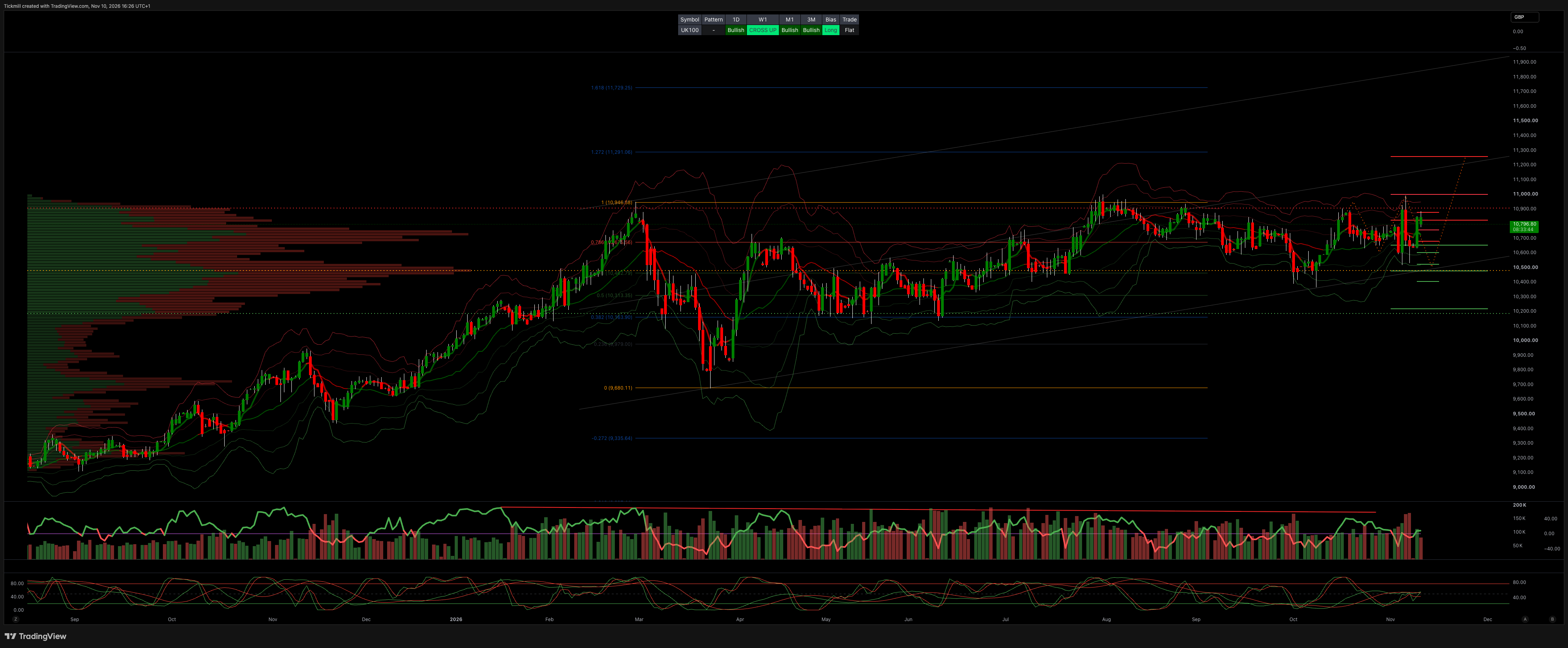
London's benchmark FTSE 100 surrendered an initial morning advance to slip back below the flatline on Tuesday, heading into the close down nearly 0.5% after closing at 10,782.87 on Monday. Global equity sentiment turned distinctly sour following hotter-than-expected consumer price inflation readings from the U.S., compounded by hawkish commentary from Federal Reserve officials that rekindled expectations of prolonged policy tightening. A resulting spike in sovereign bond yields and a rally in the U.S. dollar added heavy pressure to risk assets across European trading.
The top flight saw pronounced sector divergence. Energy and mining heavyweights led blue-chip decliners, with oil major Shell dropping 2.7% to pace losses alongside a 2.5% decline in precious metals miner Fresnillo. Conversely, select retail and enterprise technology counters demonstrated resilience against the broader market pullback: Marks & Spencer Group rallied 3.2% to lead gainers, extending momentum from its recent earnings update, while IT infrastructure specialist Computacenter climbed 2.7%.
Foreign exchange and global bond markets reflected aggressive re-pricing. The six-currency U.S. Dollar Index strengthened by 0.34% to 102.00, weighing on sterling. The GBP/USD pair slipped 0.36% to trade at 1.3390, traversing an intraday range between $1.3346 and $1.3459. Meanwhile, EUR/GBP ticked up 0.08% to 0.8357, and GBP/JPY held 0.03% higher at 212.33. U.K. 10-year Gilt yields rose by 1.0% to 5.1846%, tracking a global hardening in fixed-income yields driven by U.S. inflation jitters, after trading between 5.0929% and 5.1846% throughout the session and settling at 5.1311% a day earlier.
Central bank communications reinforced a restrictive policy backdrop. Speaking at a Bank of England conference, BoE Deputy Governor Clare Lombardelli delivered hawkish remarks, cautioning that the domestic energy shock has proved "longer, more persistent than we thought in July" and warning that the size and persistence of the shock have increased the risk of indirect inflation effects. Lombardelli stressed that the balance of risks to inflation remains tilted to the upside and noted that "there is likely to be a case for near-term rate increases in the absence of evidence of weakening inflationary pressures." She added that higher unemployment may do less to ease wage growth than in historical cycles due to structural skills mismatches, while the inflationary offset from weaker aggregate demand has so far been smaller than expected.
Finish Line: U.K. equities succumbed to global interest rate anxieties as hotter U.S. inflation data and hawkish rhetoric from both the Fed and the BoE triggered an afternoon sentiment reversal. With Deputy Governor Lombardelli keeping near-term U.K. rate hike options firmly on the table and Gilt yields ticking higher, the FTSE 100 retreated back below 10,750 ahead of Thursday’s pivotal domestic Q3 GDP release.
Disclaimer: The material provided is for information purposes only and should not be considered as investment advice. The views, information, or opinions expressed in the text belong solely to the author, and not to the author’s employer, organization, committee or other group or individual or company.
Past performance is not indicative of future results.
High Risk Warning: CFDs are complex instruments and come with a high risk of losing money rapidly due to leverage. 68% and 74% of retail investor accounts lose money when trading CFDs with Tickmill UK Ltd and Tickmill Europe Ltd respectively. You should consider whether you understand how CFDs work and whether you can afford to take the high risk of losing your money.
Futures and Options: Trading futures and options on margin carries a high degree of risk and may result in losses exceeding your initial investment. These products are not suitable for all investors. Ensure you fully understand the risks and take appropriate care to manage your risk.
Patrick has been involved in the financial markets for well over a decade as a self-educated professional trader and money manager. Flitting between the roles of market commentator, analyst and mentor, Patrick has improved the technical skills and psychological stance of literally hundreds of traders – coaching them to become savvy market operators!